



 Home
HomeReflections on CMEF 2026 Shanghai: When Medical Technology Begins to "Think" and "Empathize"
 Apr 13,2026

Reflections on CMEF 2026 Shanghai: When Medical Technology Begins to "Think" and "Empathize"
As I walked out of the National Exhibition and Convention Center in Shanghai in April 2026, after the 93rd China International Medical Equipment Fair (CMEF), my mind was packed with tens of thousands of new products from nearly 5,000 companies spread across 320,000 square meters. But what truly lingers is a powerful realization: medical technology is undergoing a profound transformation—from a mere "tool" into a true "partner."
This was no ordinary product showcase. It was an opportunity to reach out and touch the future.
I. The Confidence of "Made in China": From Individual Breakthroughs to Ecosystem Going Global
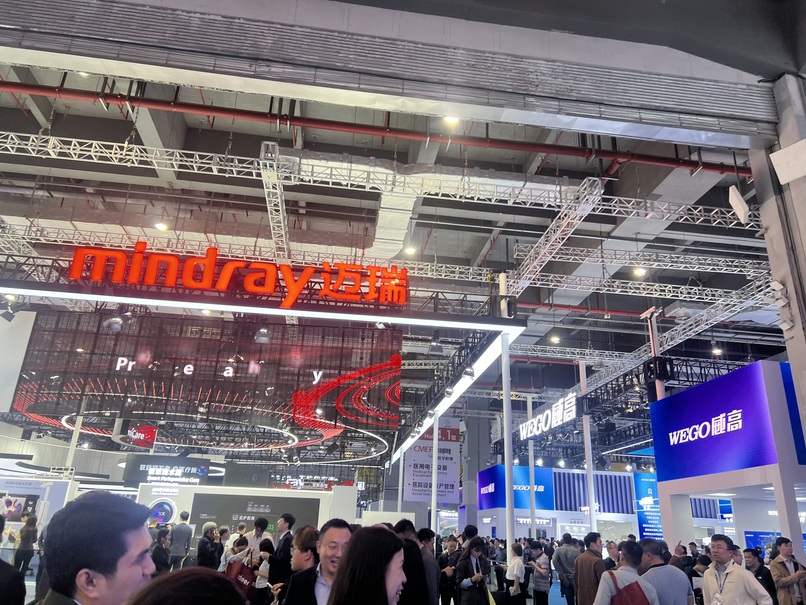
The most immediate change was the shift in atmosphere. In previous years, the booths of international giants were always the center of attention. But this year, the booths of domestic leaders like United Imaging and Mindray were equally crowded—with many foreign faces among the visitors.
This growing attention is no accident. United Imaging publicly unveiled its "United Imaging Surgery" ecosystem for the first time. It no longer simply showcases a clearer CT scanner or a more flexible robot. Instead, it seeks to close the entire loop from imaging to decision-making to execution. The coordinated operation of "eye (imaging) + brain (AI decision) + hand (robot) + instrument (smart device)" can reduce surgical planning time from 30 minutes to just 5. This sends a clear signal: Chinese companies are no longer satisfied with being "champions" in individual segments. They are now capable of providing holistic systemic solutions.
This leap in capability directly supports the "going global" trend. Mindray's international revenue has surpassed half of its total, and United Imaging has seen significant overseas growth. Behind these numbers lies the transformation of China's medical equipment industry from "following" to "running alongside" and even "leading" in certain areas. CMEF itself has evolved from a window for importing technology into a "super hub" for exporting "Chinese solutions" to the world. With the establishment of overseas exhibitions, for example in Malaysia, we are witnessing a leap from "product export" to "platform export."
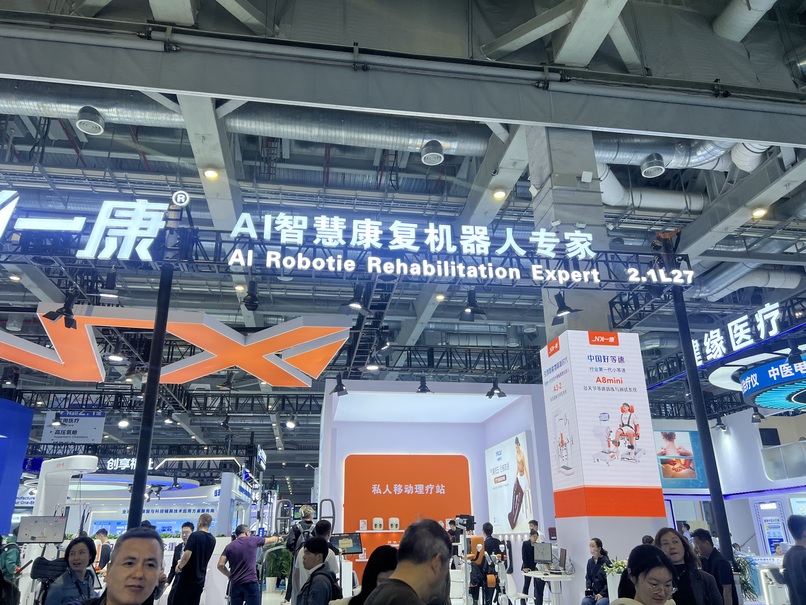
II. The Pivot of Giants: Deep Localization and Integration of Foreign Companies in the Chinese Market
Equally compelling as the rise of domestic brands is the deep "localization" strategy of multinational giants. At Siemens Healthineers' booth, 90% of the products on display originated from local innovation and Chinese manufacturing. At GE Healthcare, over 60% of the exhibits were developed by Chinese teams, with 95% manufactured in China.
This is no longer simply "in China, for China" production. It represents a genuine shift of R&D focus. Multinational giants are now using the ingenuity of their Chinese teams to address the unique clinical needs of the Chinese market. For instance, Siemens Healthineers showcased a "pan-interventional ecosystem" that breaks down data silos between different devices, designed to solve real-world pain points in Chinese hospital workflows.
A healthy competitive landscape has taken shape: domestic giants are pushing upward, while international giants are integrating deeply. Competing side-by-side, the ultimate beneficiaries are China's medical institutions and its billions of patients.
III. The "Smartest Brain" Enters the Hospital: AI is No Longer a Concept, But a "Necessity"
If AI was still a "cloud in the sky" at previous exhibitions, at CMEF 2026, AI has truly "landed on the ground."
At the ShuKun Technology booth, I witnessed the most touching scene. An imaging department director from a primary-level hospital in Hebei Province, upon learning that AI technology is now being used in "two-cancer screening" (breast and cervical cancer) and can alert doctors to potential risks in real-time, had a look of genuine longing in his eyes. Faced with a wait for a live demo, he blurted out, "It's okay, I can wait."
Behind this simple statement lies the most authentic need of China's primary healthcare system: access to quality resources. Young doctors in these settings develop skills slowly and struggle to gain experience. AI acts like an "ever-vigilant senior physician," helping them see details in complex images and reduce missed diagnoses. At that moment, the value of AI became concrete: it's not just an efficiency tool; it's a booster for healthcare equity.
From "one-scan, multi-check" cardiopulmonary screening to fully automated smart ultrasound systems that can perform both scanning and diagnosis, AI is penetrating every aspect of diagnosis and treatment. While technological sophistication is impressive, as that doctor wanting to screen his parents said, "This is really good!" — technology only wins hearts when it has warmth.
IV. Disruptive Innovation: Brain-Computer Interface Moves from Sci-Fi to Reality
If there was a "most eye-catching" star of CMEF 2026, it was undoubtedly the world's first approved invasive brain-computer interface (BCI) medical device.
At the Boruikang booth, a coin-sized implant placed on the dura mater (outside the brain tissue) allows paralyzed patients to control a pneumatic glove to grasp objects—using only their "thoughts." This is no longer a scene from The Matrix. It is a real product approved for market by China's National Medical Products Administration. When technology begins to directly read and execute the brain's commands, the boundaries of rehabilitation medicine are dramatically expanded.
Simultaneously, non-invasive BCI is showing immense potential in the auxiliary diagnosis of psychiatric disorders. Giants like Siemens Healthineers are also making strategic moves, providing the "high-definition maps" needed for intraoperative navigation. The explosion of this赛道 (track/field) signals that medical device innovation has entered deep waters, beginning to touch the very core of human life.
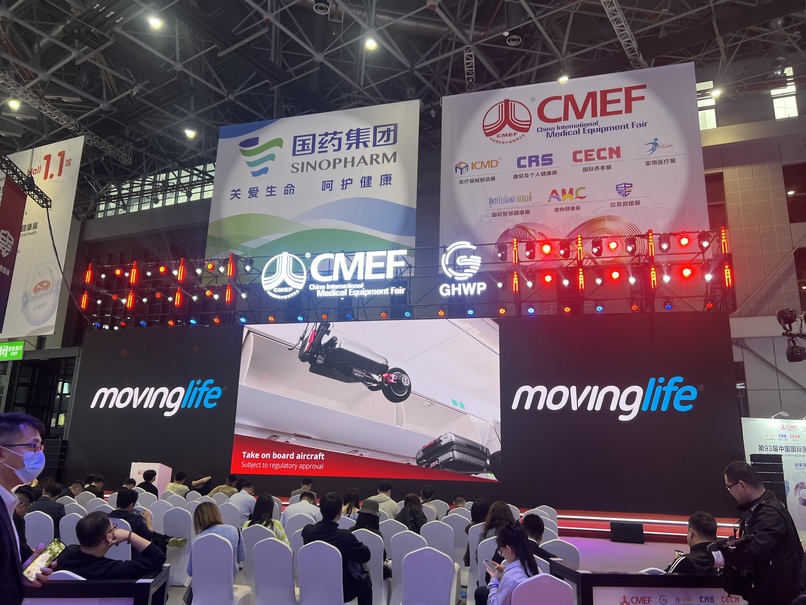
Conclusion: For the Dignity of Every Life
The four-day exhibition has ended, but those images remain vivid: African distributors enthusiastically discussing Chinese brands, nursing home administrators searching for solutions to ease the anxiety of "distance to the hospital," Taiwanese compatriots marveling at how China's complex clinical scenarios are refining the technology.
CMEF 2026 showed me that the ultimate goal of healthcare is never more expensive machines, but rather more accessible services, more precise treatments, and more dignified lives. As the appeal of "Created in China" continues to grow, as AI becomes a capable assistant to primary care physicians, and as BCI opens new windows for those with paralysis, we stand at the threshold of a brand-new era. In this era, technology and humanistic care are no longer separate—they join hands to guard the health and future of every life.
 How to Source High-Margin Knee Braces in 2026: The Ultimate Guide for Amazon Sellers & Medical Distributors
 You May Also Like




 Tel
Tel
 Email
Email
 Address
No. 2 Feilong Road, Wujian Town Industrial Park, Jiangdu District, Yangzhou City, Jiangsu Province,China